Wednesday, 26 February 2014

Book Review: Knight Fall by Joe Ducie

18692972In the third instalment of Joe Ducie’s Reminiscent Exile series, readers find a high current of fast-paced action, clever dialogue and fantastic world (multiverse) building. Knight Fall stands on its own as an entertaining, but all too quick, read and a fine continuation of the overall series.

The narrative uses various in-story tropes to weave together the past and present, from visions and flashbacks to magical means. The significance of the past, and history as a whole, works as a prominent motif in the story, massively influencing the plot. This novel is full of surprises and beautifully constructed scenes. The trick, and challenge, is to read it slowly, to pace yourself, because the urge to finish it in one setting is all-too-compelling.

Declan Hale, our brooding protagonist, returns in all his one-eyed splendour. His actions throughout the novel demonstrate how utterly formidable he is, why people are right to fear him, and the devastating consequences that hinge on his every action. Despite displaying more raw, brute force in the scenes in Voraskel than in the previous two novels, most of the confrontations work like puzzle pieces, solved by a clever dose of wit and ingenuity rather than hammering away with Will. I think this is the best approach that Ducie could have taken with his fight scenes. An epic battle between two colossal forces, while memorable and fantastic, can only be done so many times; and should probably only be reserved for the most significant moments.

Emily Grace, the immortal queen, returns in this novel, not so much a villain but as a companion to our protagonist. Emily is still ruthless and cold and calculating, but there’s a certain charm to her every action, of quality of character that can only described as “graceful.” I quite liked Emily Grace as a villain, or at least as an antihero. It was amusing to find that she had such chemistry with Declan despite the fact that she was the queen of the faction that the hero fought and killed and shed blood to defeat. Her scenes with Declan in the first two books showed promise of being a great recurring villain with the kind of cunning, manipulative force that trumps brute strength.

In a previous review, I said that the Reminiscence Exile is, at its heart, a romance story. With Knight Fall, that assessment remains unchanged. Declan will always carry the women he loved with him, as intangible as the merry band of literary ghosts in his bookstore. His reminiscences, his longing, his nostalgia are all a significant aspect of his makeup, as real as the idea of love lost, of pain endured, sacrifices rendered, and guilt everlasting.

Speaking of the Everlasting, we find out more about them than ever have before. We learn a childhood song sung in fear of them, we learn how many there are and what their qualities entail. Ducie creates these cosmic entities, great and powerful gods and goddesses, and he pits our single, lonely, drunken hero against them. At least it promises to be an amusing ride.
There are a couple things that I didn’t like about Knight Fall. One, there was not enough Annie Brie. Her characterization was one of the highlights in Broken Quill, one of its goddamn strengths, and her fleeting appearances here are notable. Two, in some of the battle scenes, Declan came off too all-powerful. Not to say that Declan’s weaknesses didn’t shine through with brilliance. This isn’t titled Knight Fall for nothing.

Knight Fall is a great installment to an already fantastic series. Ducie has carved a name for himself as a talented writer able to seamlessly blend the mythic with the urban, the ordinary with extraordinary and the mundane with the marvellous. I hope he keeps writing, the longer works the better.

Book Review: Godspeed: A Kurt Cobain Graphic Novel by Barnaby Legg and Jim McCarthy

I’ve been a Nirvana fan for about five, maybe six years. I was born in 1992 but I can’t pretend I identify with the alternative metal, grunge, post-grunge movement. I can barely call myself a Nineties kid at all when it comes to cultural identification. But it doesn’t mean I didn’t appreciate Cobain in my own way. And while I know some details about his life and tragic death, I’m not clumsy or naïve enough to interpret a comic book expression of his journey as his Word-of-God biography.

Let’s get it right off the bat that I don’t believe this graphic novel is completely true. But it’s a subjective artistic interpretation of another’s man life and the perspective it offers is still valuable. Legg and McCarthy are talented writers. They capture the burgeoning confusion and displacement of a preadolescent Kurt, the angst and depression of a teenage Cobain, and the chaos and pandemonium of the rock star he eventually becomes. Flameboy’s artwork here is gritty and messy, full of hard lines and sharp colors, bringing out something essentially Nineties in flavor and tone.

There is a scene in the novel that I found rather touching. It was where he had achieved everything he had ever dreamed of in his youth, where his accomplishments had become a reality, and he at last decided to let go of this dream, and let others follow. It’s a heartbreaking scene that doesn’t need melodrama or painstaking detail to be succinctly true. This novel can be true without being accurate.

Book Review: Foundation and Empire by Isaac Asimov

The second installment in Asimov’s classic trilogy is Foundation and Empire. The people of the Foundation face their greatest threat yet as Bel Riose, charismatic and brilliant general of the Empire wages a bloody war of conquest. At this time the Foundation’s influence has strengthened in the Periphery while the Empire wanes and decays. Rumors of the Foundation’s ‘magicians’ spread throughout the remnants of the old Empire. General Riose is thirsty for battle and glory. Knowing his prospects for conquest are poor throughout the galaxy, he turns his eyes towards the rumors of the Foundation and seeks to spark a war that will turn him into a legend.
Asimov takes the first half of the novel to build the atmosphere of assurance and invincibility that underlies the people of the Foundation. Hari Seldon’s psychohistoric predictions have gained religious faith and dogmatic certainty. Nothing, they believe, can threaten them now. But as Riose marches from victory to victory, the confidence is slowly chipped away. Individual actions lead nowhere. Time is slipping and it seems as though Seldon’s plans might be thwarted. Asimov establishes the nigh-inevitability of Seldon’s predictions, under normal circumstances, when the psychohistoric trends of the past generations turn against Bel Riose in a way that no heroic undertaking by any mere individual could have.

The first half of this book was enjoyable, pact with intellect and suspense and delightful scenes of action. It was a great way for Asimov to open this chapter in the saga of the Foundation, but it pales in comparison to the second act, where Asimov moves out of our comfort zone into less hospitable territory.

The second story is an inversion of everything we have been taught to expect. The antagonist is a mutant called the Mule who exhibits immense and mysterious powers that he uses in his aims to build his own empire. To accomplish such a feat, he wants, of course, the Foundation. Psychohistory predicts the behaviour and patterns of millions and billions of ordinary humans. The theme underpinning the previous Foundation stories concerns the unbeatable course of history and patterns over the actions of any one man. The rise of the Mule, however, who isn’t an ordinary human, derails Seldon’s plan with alarming swiftness.

Isaac Asimov crafts an intriguing novel and breaks patterns with his previous ventures into the Foundation universe. While I was not as enthralled overall by this episode as I was of Foundation, Asimov sets the stage for a turning point in his narrative, one full of potential and uncertainty. The story of the Mule is easily the most captivating of both the two stories in Foundation and Empire and the first novel.

Wednesday, 27 November 2013

Book Review: Tweak3nd by O.R.N.

Consider this neat little scene in the sort-of prologue: the narrator is in the bathroom, checking herself from every conceivable angle only to find that she cannot perceive her reflection. This event serves dual roles. First, it illustrates the loss of identity that these characters, this disillusioned slice of a generation, inevitably experience. Their constant and gratuitous exploitation of drugs and alcohol, not only numbs and alters a pervading reality of bland meaningless existence that they desperately try to escape from, but also numbs them from any grip on the meaning of Self. They lose themselves, and further their substance abuse to flee from that too, entrenching themselves in an uncertain ouroboros, spiraling towards despair. Second, the metaphor of the missing reflection illustrates the status of the narrator. She is a placeholder for us. We see through her eyes, into her world, with or without her prejudices. She plays no significant role here, despite an amusing, yet misleading opening chapter.

These characters are quite infuriating to think about, with their copious intake of alcohol, toxic nihilism, and extreme ways of avoiding their purposeless lives. It’s just as disappointing to realize that these people exist, that their lives, while exaggerated, are inevitably real. O.R.N. provides a mirror for us to examine a few days of their amoral lives and see aspects of our own reflected back. This is unromanticized reality, complete with Facebook statuses, BBMs, and tweets.

O.R.N. maintains a steady dubstep-infused tempo of witty irony through a flow of music, situations, and steam-of-consciousness monologues. Dave piles on the entertainment and waxes philosophy with almost tireless energy, creating this short novel featuring more liquor consumption than some pubs. Yet, in spite of the captivating style, there’s hardly a plot. The conflicts are mostly internal struggles, but by the end, there is no resolution, no conclusion to these kids’ meandering existences. Well, how can you end a book like this? I don’t know, so I don’t fault the author for it.

In many ways, Tweak3nd mirrors Ellis’s Rules of Attraction, which in a scene it even alludes to. The hedonistic party college culture seems an extension of this earlier novel, to the point that it seems, at times, like Tweak3nd is this generation’s version of Ellis’ work. Some chapters, particularly the opening segment, remind me vaguely of Chuck Palahniuk’s satiric writing. They are humorous, sarcastic, and transgressional. It was surprisingly clever and well-written for a self-published work. Tweak3nd is worth a shot or two, like good scotch, and though it might not be to everybody’s tastes, it will either open your eyes to the kind of debaucheries our youth are up to, or at least give us a viewpoint into understanding the psychological reasons behind this behavior or the mentalities of kids that partake in this. Either way, as twentysomethings, we all learn to hate the cool kids a little more (or feel sorry for ourselves, if we are like them).

Friday, 24 May 2013

Book Review: Broken Quill by Joe Ducie


“Broken Quill” is longer and more epic than its predecessor. There’s a car chase. In Perth, Austrailia, a series of atrocities circles around Declan Hale, the Immortal King and Shadowless Arbiter. Declan is being stalked by an unfathomable and seeming unbeatable foe while across True Earth, the Knights Infernal retreat to Ascension City, leaving the world unprotected. After a harrowing battle with Emissary, the one responsible for brutal murders around Perth, Declan leaves Earth to have his questions answered. Sophie and Ethan return from “Distant Star” and Detective Annie Brie joins him on his journey across the literary worlds. From here onwards, it’s epic madness, majestic landscapes, and devastating battles.

Two books in and if there ever was a more apt theme to assign to this series it would be that while our regrets may be inescapable, still we soldier on, and mayhaps find redemption along the road. Declan’s guilt seems to weigh heavily on him, so much so that his finest ability is his invulnerable liver. But the true arc of our protagonist is his emotional and mental shift from reactive guilt to walking on the perpetual road to redemption.

As usual, Ducie illustrates otherworldly landscapes with a masterful hand. He lends his descriptive powers to a slew of colourful worlds, strange characters, and vividly depicted scenes. We glimpse a little of Hale’s past in “Broken Quill”, from his time as a commander during the Tome Wars. The scene reminded me a little of Star Trek, maybe Firefly. These flashback scenes are a treat to watch and spliced within the present narrative gives a juxtaposing weight to the story, compelling readers to compare Declan’s situation now with the glory of his past. It accentuates his regrets and guilt and gives us a deeper insight to his nature.

Ducie teases us with Annie Brie’s character. She’s an anomaly, an enigma. She shares Ethan’s role in serving as the reader stand-in for exposition and questions, but she is more significant than that, but in what ways we don’t know. As a character, Annie is well-crafted. She is sweet and bold, brave and daring. She is an excellent companion for Declan, the Amy Pond to his waistcoat-wearing Doctor. They have chemistry and balance. Her innocence and wonder are foils to Declan’s deepened cynicism and experience. Whether their relationship remains platonic is up in the air. Ducie gives evidence for either direction.

Whether intended by the author or not, I think on a deeper level, The Reminiscent Exile serves as a poignant metaphor for the metafictional, self-reflexive, and intertextual nature of pop culture in general, and popular literature in particular. Like the breadth of popular culture, “Distant Star”, and more so “Broken Quill”, permits a host of self-referencing remarks for the reader to catch and literary allusions to its intertextual predecessors. The notion that Declan and his friends can pull out aspects from books is a clever reference to real-life authors borrowing genre conventions and concepts from other authors. But dig deeper and it gets more complex. The characters take their own reality and shine a light on it, forcing us readers to question our presumptions about Declan’s multiverse and the essence of reality. Take, for example, a conversation Annie Brie has with the protagonist. She remarks that this “feels as if we’re in a storybook ourselves.” This metafic snippet made me a little giddy inside. I had a déjà vu moment, reminding me of the time Roland Deschain and the ka-tet learnt they were characters in a Stephen King series. I almost expected Ducie’s characters to learn they were written in a blaze of scotch- fuelled madness.

The conflict and drama in “Broken Quill” open up the mythology and universe to the reader. Threads started in “Distant Star” ascend to the fore in this second novel and set the way for future stories and future battles. In hindsight, “Distant Star” feels like an extended prologue placing characters into position and setting the field for battle. “Broken Quill”, therefore, is the opening salvo of an inevitable war that has been long in the making.

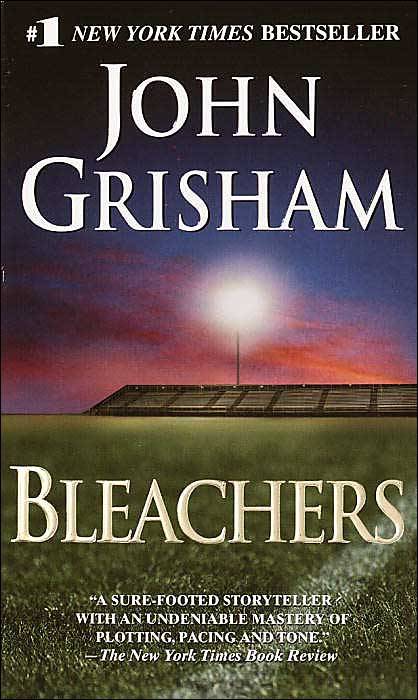
Book Review: Bleachers by John Grisham


John Grisham has written books outside his field of legal thrillers before. The first one I read in 2011 was “Skipping Christmas” which they adapted into a movie some years back. I wasn’t very pleased with the story and came away thinking Grisham should stick to novels like “Runaway Jury” or “Innocent Man”. But Grisham isn’t a bad writer himself and I had a copy of “Bleachers” on my shelf from an impulse purchase at a second-hand store, so I committed myself to engaging his tiny novella. Unlike “Skipping Christmas”, Grisham explores much more personal themes concerning forgiveness, the measure of greatness, the unfairness of life, and finality of our choices.

Eddie Rake, the dying coach, for whom many of his former players return to their hometown to pay their respects, was something of a hard ass. They all hate Coach Rake at some point, but come to grudgingly respect him for all he has taught them. One of his players, Neely Creenshaw, harbours a secret about a violent altercation between the coach and himself. After that fight, Neely has been bitter and distant, and the vigil he gives his coach is also a vigil for the man he used to be, and the man he could have become. Grisham works to deconstruct the legend that is Eddie Rake through the collective experiences of his players. Rake’s reputation of greatness is undisputed, but like everyone else, he is just a flawed human being prone to the same mistakes. The vigil his players hold for him illustrate that despite his cruel regimes, gruff exterior, and rough countenance, he has a man who loved his players but couldn’t show it; adored his family, but dominated them, and loved to triumph, but couldn’t fathom defeat.

Neely spends fifteen years drifting through life in bitter stupor after he suffers a knee injury that ends professional football career. His wife leaves him after two miscarriages. But the shadow that hangs over his life is the confrontation with Coach Rake in the locker room of their 1987 championship game. He never forgave the man until he returns to his hometown for the first time in fifteen years to sit vigil for his coach. Grisham paints a sombre man lost in his reverie, longing for the better times after having fallen on hard ones. Neely’s air is permeated with a sense of loss and grieving, both for his own soul and for his fallen coach. He is man of deep regrets, for his lost love, his game, and his coach.

Grisham tells us that we can’t reclaim the past. When Neely meets his former girlfriend and apologizes for the way he treated her, there is almost a moment when the reader can see how desperately Neely hopes to venture back into the past. But soon after that point, reality steps in and we see just how much their lives have diverged. Not all rifts can mend. We can’t go back into the past, but what this story illustrates is the hope of letting go of it and moving forward.

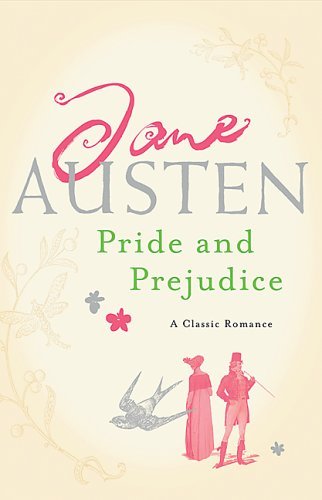
Day 40: Pride and Prejudice by Jane Austen

Pride and Prejudice is a classic love story and interesting phenomena of both pop culture and high culture. This is the Victorian tale of prideful Mr. Darcy and prejudicial Miss Bennett and how they meet and interact amidst local politics in the socio-political norms of the bygone era. This is an excellent romance that is relatively feminist for its time and praised for its characteristic witty dialogue. Austen’s portrayal is sharp in its biting accuracy towards gossips, a colourful past, and a rich society.
              

Day 39: The Amory Wars: The Second Stage Turbine Blade by Claudio Sanchez

This graphic novel is actually the second in the series, preceded by a prose novel setting up the events depicted here. But since this was published first, I thought I’d start off here. Sanchez is the frontrunner of the band Coheed and Cambria, the music they play is the work that the comics are based off. The meta concept is really interesting and you might worry that the stories might not live up to the form, but you’d be wrong. The Amory Wars tells the tale of Coheed and Cambria Kilgannon, a married couple from a little peaceful neighbourhood on one of the seventy-eight planets held together by mystical energy called Heaven’s Fence. The couple believe they are just ordinary people until disaster causes them to confront their mysterious origins and take the war to the dictator ruling Heaven’s Fence, Wilhelm Ryan, the Tri-Mage. The story evokes images of Star Wars but the writing is lyrical and fluid. Claudio Sanchez is a great writer, the art is wonderful, and the story Shakespearean.
                        

Tuesday, 12 March 2013

Book Review: Distant Star by Joe Ducie

image

Joe Ducie’s Distant Star reads a little bit like a Harry Dresden novel, but the comparison lacks. Distant Star is grittier, flourishing, and a touch alcoholic. The imagery is evocative of King’s Dark Tower series. The story revolves around Declan Hale, a Knight Infernal, who is exiled from Ascension City to True Earth for his horrendous, albeit necessary, crimes during the Tome War. After his exile, Declan opens a bookshop in Perth, Australia, and lives his days in relative peace until that calm is broken by a calling card from the future, one that drives him back to old habits and Ascension City, where tensions run high and war is imminent.

Declan’s world –a multiverse, really– contains individuals that possess Will (magic). Some of those with Will write stories that because of the Story Thread become separate worlds, places that other people with Will, like the Knights and Renegades, can walk in and out of. While the setting and atmosphere denote a contemporary urban fantasy, there is an element of the mythical from fabled Atlantis to universes spinning in the void. The story starts off within the urban sphere and shifts towards the otherworldly as Declan slides down the gradient from archetypal reluctance to proactive heroics. Declan is a powerful hero and he justifiably intimidates friends and foes alike, but he is not a deus ex machina that is undefeatable, indefatigable, and all-powerful. It’s not like he can’t die.

The character himself is intriguing. Declan is like the Doctor, Dresden, and two fingers of scotch. He is the quintessential war-wearied and reminiscent exile. The inner monologues are insightful and often poetic; they explore his humanity and sanity, his unyielding arrogance and quest for redemption, the greater reaches of a universe that he is on the fringes of, and the complex machinations of the people around him. Undoubtedly, Declan Hale is the most fully-fleshed out character, and through his eyes, we get a glimpse of his lost love, Tal Levy. That’s the other thing about Distant Star: it’s not just a fantasy adventure. This is, at its heart, a love story. Ethan is the reader stand-in through who Declan exposits the nature of their abilities and some background history. Sophie, Tal’s sister, made no particularly strong impression on me. Nor did King Morpheus Renegade. Marcus’ unbending sense of right and wrong over notions of loyalty make him one to watch out for. Perhaps it’s just because I like villains and bad girls because the other two characters to strike a chord were Jon Faraday and the Immortal Queen. The former is not evil per se, but he has consolidated his hold on power, a hold that is threatened by our exiled protagonist. The impression Faraday makes is that however misguided his intentions, however ruthless his actions, he does it for the greater good. With the Immortal Queen, however, all bets are off. She could just be a cutthroat, evil bitch. As King Morpheus’ wife, her intent and purpose among the Renegades are in question, along with everything else we know about her.
 
Ducie’s writing is concise and vivid, sensational for certain, depthful in its brevity. His tone affects melancholy, a sharp juxtaposition to the gold Australian setting. The places he visits, that he dares to show us, are portrayed with all the trappings of truly opulent grandeur. It’s hard not to get hooked on this book. Its largest flaw is that it didn’t last as long as Martin’s A Storm of Swords.

The novel plays the conventions of fantasy really well, and references a huge sweep of literature and pop culture. There are allusions to Harry Potter (this is magic, how could there not be?), Tolkien, mythology, Holmes. Fittingly so, considering this is a book about books. I even got a hint of Doctor Who about the Tome War, which remind me so poignantly of the legendary Last Great Time War that the Doctor, like Declan Hale, played a central role in ending by committing a terrible act. That being said, Distant Star is unique from all those works, swapping concepts and crafting a story worthy of attention.

Saturday, 9 March 2013

Day 38: The War of the Worlds by HG Wells

For a Victorian era piece, Wells astonished me by the level of gritty, gruesome realism he portrays ravishing England in this powerful novella about extra-terrestrial invaders from Mars. You might have seen the Tom Cruise version set in modern times or you might even have some knowledge of the radio play. But this original is just as good, as vivid, and haunting in its approach of classical weaponry against a monstrous foe they can’t even conceive of. Wells is a fantastic speculative writer with a vivid mind.
       

Day 37: The Republic by Plato

One of Plato’s greatest works and one of the founding pillars of political philosophy, The Republic is a Socratic Dialogue that explores essential themes in Plato’s society that holds just as crucial relevance today. His views on justice and the unjust, governance, power, and morality are all exhibited with Plato’s brilliant logical primacy. Even 2393 years after it was written, this work is still read and studied today. The concepts within are still significant. The thought is staggering; I can’t think of anything else that is as important today from so very long ago. That alone merits a look into Plato’s magnum opus.

Day 36: Storm Front by Jim Butcher

A great novel about the dark, urban adventures of professional wizard Harry Dresden. This is the first in the series and right away, the tension begins to build as Dresden is thrown headfirst into the trauma and violence of Chicago’s drug war. Butcher has a good hand for characters’ personalities, but they are a little one-dimensional. The pacing and tension never slows down. For a debut novel, this is classic textbook and it definitely got me hooked for the next one.
                

Day 35: Survivor by Chuck Palahniuk

Palahniuk’s novel is a tantalizing satirical examination of media culture, religion, celebrity icons, and suicide. It’s a fast-paced, provocative, and funny as all hell. Tender Branson –the last surviving member of the Creedish Death Cult– is dictating his life story into a black box before the airplane crashes, from his meek subservient beginnings as a Creedish child to the drug-abusing, hypocritical, collagen-bloated mass media messiah.

Tuesday, 26 February 2013

Day 34: Distant Star by Joe Ducie

image
Ducie’s work is a cocktail mix of the best elements of fantasy, both classic and contemporary. A debut author, Joe Ducie, concocts his merry story like a bartender would mix me my tequila and pineapple juice: fast, sweet, sexy, and strong. Both the descriptive factors and the characters taste familiarly of the Dark Tower and the Dresden Files. This is a tale of love lost, redemption unfound, the schemes men make for power, and the remaking and unmaking of worlds. It’s a descent into madness and chaos, and it’s a helluva ride.

Stiff by Mary Roach

“Stiff” is a macabre, compelling, witty investigation of the postmortem. For such a small book, Roach covers a broad scope of accumulated knowledge regarding our dead-selves, its history, and purpose. She treats taboo topics with a sensitive hand and the intense, painstaking attention to detail apparent in the exposition easily lends her major authority on the topic. Mary Roach aims to shed light on the achievements and involvement of cadavers in scientific advancement. With two-thousand years of history to sift through, she manages to highlight the most significant (and most unique) examples with a deftness and awareness that is amazing.
 
Roach approaches life and death and the strange topics that most would find distasteful with a light touch and a humorous voice. Her little sidebar footnotes are terrific and often funny to read. Throughout the book, she sprinkles her opinions and confusions and own ideas, giving the prose a distinctly living taste. But never is Roach disrespectful to the cadavers or those who donate their bodies, which I think is an important factor that makes this book popular.

I love reading nonfiction literature. It is a breadth of knowledge that is as valuable to human imagination as great fiction. I was skeptical when I first decided to open “Stiff.” A book about cadavers isn’t my regular cup of tea, but I’ve come to realize that what we need is to step out of our comfort zones once and a while. I think we’d all be a little mildly, delightfully surprised at what find. For example, I pleasantly learned that cadavers had a hand in testing the authenticity of the Shroud of Turin, in France’s first guillotines, heart transplants, solving the mystery of the TWA Flight 800, and the first blood transfusions. In their silent, unassuming, and unpretentious way, cadavers have been working to make life better for those left behind.

Tuesday, 19 February 2013

Book Review: Foundation by Isaac Asimov

imageIt is astonishing to realize that science fiction consisted of a relative humble portion of Isaac Asimov’s ouevre. While most of his time was spent on nonfiction work, his contributions to science fiction proved so monumental that there is not a single science-fiction writer today who has not been influenced, in some way, by Asimov’s writing. His intellectual and engaging fiction has produced some of the finest short stories and novels in the genre, in classics such as “The Last Question” and “Nightfall”. But his seminal work is the top-of-the-pyramid, groundbreaking, and famous “Foundation Trilogy”. He is to SF what Tolkien is for Fantasy.

“Foundation” is an entertaining piece of sociopolitical SF in the backdrop of a space opera. This book is the foundation of SF for the past six decades. Asimov’s prose is clear and concise, without any room for ambiguity or vain style. Asimov’s words, though pared down and stripped of subtext, are not any less true or beautiful or witty.

Set thousands of years in the future, after humanity has colonized millions of planets in our galaxy, “Foundation” introduces the Galactic Empire is in its waning years. One man on the capital planet of Trantor, Hari Seldon, predicts the cataclysmic and chaotic decline and fall of the Empire. Seldon has developed the science of psychohistory, which aims to calculate the behaviour of mass populations over the course of events using, among other things, socioeconomic trends. Seldon has predetermined not only the demise of the Empire, but that thirty millennia of barbarism will follow, unless his organization, the Foundation, is able to finish its gargantuan mission of cataloguing and preserving all accumulated human knowledge and history. The act would serve to lessen an inevitable thirty-thousand years to a mere thousand.

Asimov portrays the epic grandeur of the galaxy through the unyielding arc of time and history. Individual lives are ineffectual, though not inconsequential, in the grand scheme of things.  Throughout the stories, there is a pervading sense of ‘greater good’ or ‘the bigger picture’. There is only one recurring character in each of the five tales: the Foundation. It stands in the background, an entity both mysterious and arresting; a godlike presence that shaped religion and ruled a city. The story of the Foundation is portrayed through the periodic snippets of human life throughout the growth of the First Foundation from an indefensible, dependent, colony in the backwaters of the outskirts of a great empire to a massive political juggernaut with commercial and technological prowess. The central characters: Hari Seldon, Gaal Dornick, Salvor Hardin, Linmar Ponyets, and Hober Mallow are seen in flashes as their importance and contribution to the longevity of the Foundation is waxes and wanes.Asimov has an arresting flair for conjuring up a methodical, articulate, and complex history. In the battle for free will over determinism, Asimov’s “Foundation” falls securely into the side of the determinists. Psychology and economic trends and the insurmountable turn of time dominate the short stories with a sense of inevitability. But it the tone of the story is far from pessimistic. There is only ever the slightest indication that they should lose hope, or that individual lives are meaningless. As one character says, “Seldon’s laws help those who help themselves.” Asimov appears to advocate forging a better future through the sole and collective action of the present.Unquestionably, “Foundation” is an intellectual treat that tends to emphasis the background scenes as opposed to the ones that illustrate more action. Most of the book is exposition and dialogues between characters in a meeting over smokes. The third story, The Mayors, provides the most exciting, and arguably cleverest, climactic confrontation in the book. It is a scene between Mayor Hardin and Prince Regent Wienis. Hardin, in a stroke of brilliance, has manipulated events to stave off a rival political party’s attempt to impeach him and end the threat posed by the Four Kingdoms.“Foundation” is a significant to the genre in more ways than the ideas it challenged us with. It is the culmination of science fiction into a literature encompassing reason and ideas. It reinvigorated the genre and turned it into a platform of higher ideals and concepts. “Foundation” steered it away from the pulp swamp creatures. It did for science fiction what “Spiderman” (2002) did for superhero movies, or in particular, what Christopher Nolan’s “Batman Begins” (2005) reboot did for the franchise. Asimov gives us excellent characters, complex sociopolitics, and a good story that never wanes.

Book Review: FreakAngels Vol. 1 by Warren Ellis


Originally a free webcomic that was released every Friday, this collects the first 24 issues. Twelve children were born in England at exactly the same moment. They exhibit psychic abilities at varying degrees. Six years ago, the world ended in an undisclosed cataclysm that has left civilization in ruins. Now, at 23, they try to piece together their lives in Whitechapel, maybe the last real settlement in flooded London. They are the self-proclaimed Freakangels, the councilors and protectors of Whitechapel. Of the original twelve, only eleven remain.

This opening arc begins with a girl named Alice walking into Whitechapel, wielding a shotgun, and crying out for the Freakangels. When they detox her of the subliminal junk in her brain, Alice serves as a placeholder for the readers. Her tour of steampunk Whitechapel is our introduction to this strange, new world. She may even be a reference to “Alice in Wonderland”. She certainly left behind normalcy and entered a very different world.

Warren Ellis is a clever writer who allows the reader to glimpse fragments of the plot. He alludes to the developing backstory, unravels lengthy exchanges depicting the interpersonal relationship among his large ensemble of characters. The best asset of “FreakAngels” is the brilliant dialogue. Ellis has a masterful touch for regional accents; the characters are distinguished by variances in speeches: KK, for example, is bemused and snarky, while Luke sounds bitter and indifferent. The British overtones are thick in the air and the dry humor punctuates the punk teens’ exchanges.

Paul Duffield is a fantastic artist. The purple eyes, the scenic landscape, the authoritative command of colors really bring out the somber atmosphere of post-apocalyptic Whitechapel.

This is a neat achievement in webcomic publishing. Ellis is consistent in his prominent intellectualism and unbridled vulgarity. The sociocultural themes are apparent throughout the story. Despite the steampunk motifs (Victorian-style corsets, stunning inventiveness), the essence of the story more inclined towards the post-apocalyptic field, as it charts the progress of rebuilding and redemption.

Book Review: When Patty Went to College by Jean Webster

                                                
Jean Webster published her first novel, “When Patty Went to College” in 1903. Like her uncontestably more famous “Daddy Long Legs” (1912), her debut novel was based on her life and experiences in a women’s college. The book is a collection of loosely connecting stories about Patty Wyatt’s senior year, beginning with her first day in her new dorm and ending a few weeks before graduation. As “Daddy Long Legs” introduced me to Jean Webster’s body of writing, I admit it was rather difficult not to draw comparisons between the two novels, and particularly, between Judy Abbott and Patty Wyatt.

Patty Wyatt could have been a politician had she been born in a more modern time. She can be described as charismatic and imperturbable, carefree and creative, lazy and intelligent, fun-loving and reckless. Throughout the book, in spite of Patty’s misadventures, clever antics, and pranks on her fellow classmates to entertain herself, she is well liked by her friends and faculty. As Cathy Fair tells her in the denouement to the final story, “I’ve always liked you, Patty,—everybody does,—but I don’t believe I’ve ever appreciated you, and I’m glad to find it out before we leave college.” She can be a trifle judgmental, cuts church, and can hardly be moved to study more than she absolutely has to, and yet, whenever Patty is confronted between the right choice and the easy way out, she displays a strong sense of morality and honesty in spite of the consequences. I like her character. Patty is easygoing and yet proactive; you just know that if she were the recipient of an anonymous benefactor to study at college, she wouldn’t be inclined to send monthly letters to her mysterious figure. No, Patty Wyatt would have tracked him down and pulled aside the curtains to reveal Jervis Pendelton before her first letter even arrived in his mailbox. Judy’s story is one sprawling adventure spread over her collection of chronicling letters; Patty’s story is a collection of all these tiny adventures that compose one book. I wonder if she drank coffee.

The book lacked cohesion in its narrative. Each story was a snapshot of life from the beginning to end of her last year in college and yet I couldn’t help but feel like it was missing a unifying theme or oscillating purpose. Some of the stories concentrated on Patty’s dilemmas involving owning up to her faults and confessing; these pieces connected in their purpose of showing Patty’s gradual maturity.

In context, the relatively heavy-handed moralizing in some of Patty’s tales is to be expected. This was a novel written in the early 20th century for children and adolescents. It could have been far worst. Traces of Webster’s first-wave feminism shine through and are as strong as they are in her later writing. She explores contemporary issues such as women’s rights, women’s education, socialism, and gender roles with an air of a bygone era’s lightheartedness. On the whole, I would classify this as lighter than “Daddy” or “Dear Enemy,” which I find to be Webster’s most serious endeavor. I liked this novel on its own merit. The glimpse into life of a bygone time and place, into the world that Jean Webster occupied for years, was worth the read.

Book Review: The Rules of Attraction by Bret Easton Ellis

Ellis displays his engaging and captivating stream of consciousness writing. He speaks through the thoughts of varied characters in a college where self-absorbed, bohemian students find themselves in more parties than classrooms, and sex and drugs run rampant. “The Rules of Attraction” offers a dark and satirical take on the upper-middle-class college student culture. Set in the fictional college town of Camden, New Hampshire, the novel is narrated in first-person by the sexually students, in particular, revolving around three: Paul, Sean, and Lauren. The novel begins and ends in mid-sentence, giving the impression that there is really no beginning and end to the story. The reader was just there for the ride, passing like a tourist through Camden and glancing sideways into their lives.

“The Rules of Attraction” is fundamentally a story that studies the rules of attraction that exist between affluent students in a college town. Plot is unnecessary. The traditional aspects of stories are accessories. The important stuff is in the questions that are asked: Who will you hook up with tonight? What are you going to wear at the party? How do you get laid here? Who do we need to see to get drugs? Through satire and dark comedy, Ellis portrays the corruption of youth and the discrepancy between reality and fiction. This exaggerated and distorted manner in showcasing campus life hones the reader’s awareness to these particular realities.

The portrait of campus life for these students is heavily aided by the shifting first-person which illustrates the varying priorities that are juggled throughout the year and paints events from multiple angles. The reader’s interpretation is an essential part of understanding the story. Paul’s narratives focus on his sexual encounters with Sean, while Sean leaves them out entirely in his, leaving the actuality of their occurrence ambiguous. These uncertain passages give weight to the novel and force the readers to perceive the development of the characters.
Bret Easton Ellis does a fantastic job in displaying a segment of society that perhaps many readers are not a part of, if they even knew existed. He creates characters that are selfish, nihilistic, world-weary, experimental, callous, and narcissistic. He does it without batting an eye. They are interesting to watch and study, but I don’t think I’d invite them over for dinner.